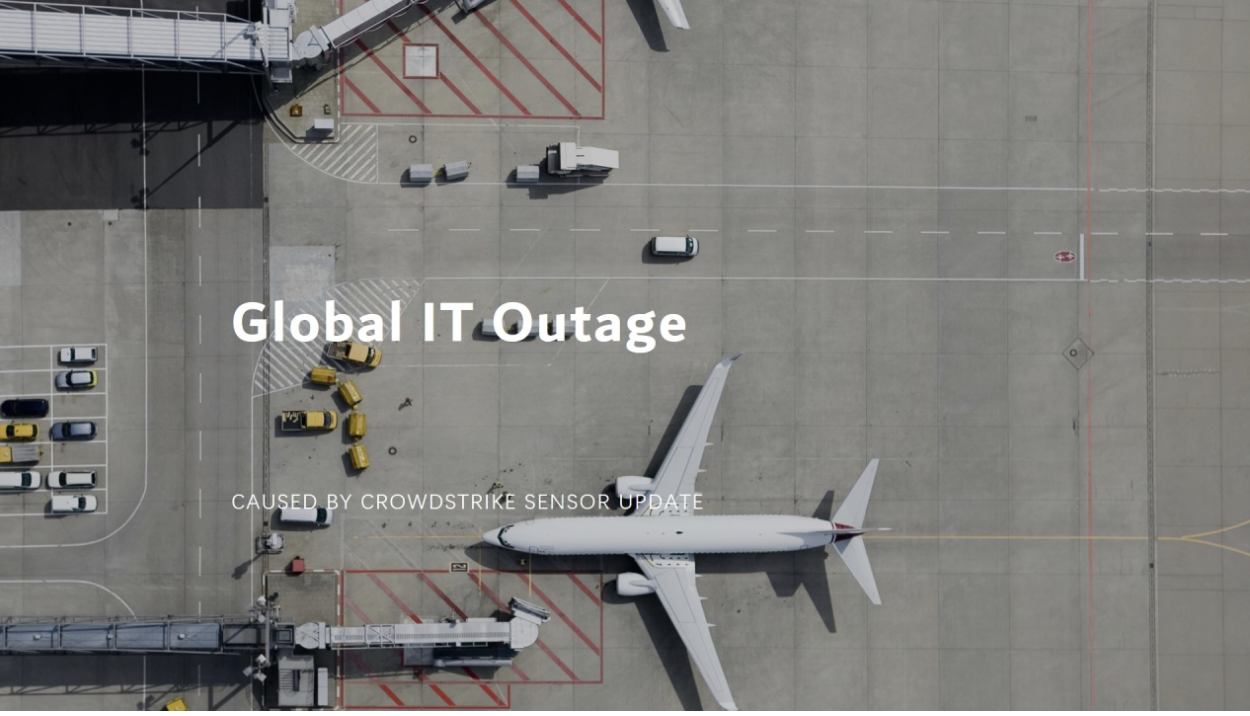
My First-Hand Account of the CrowdStrike Outage:
My firsthand account: As an IT (Information Technology) professional, I recently found myself amid a significant event: the CrowdStrike outage caused by their release of an update, which led to a global Microsoft outage. The response and action by both and CrowdStrike and Microsoft were commendable. While this was an unforeseen situation, their responsiveness and ability to assist their clients was impressive! That being said, there is a lesson to be learned from this for all IT professionals.
The incident, described by CNN as the largest IT outage in history, is expected to cost Fortune 500 companies over $5 billion in direct losses, according to an insurer's analysis published on Wednesday. Some sources suggest that global financial damages could be around $10 billion.
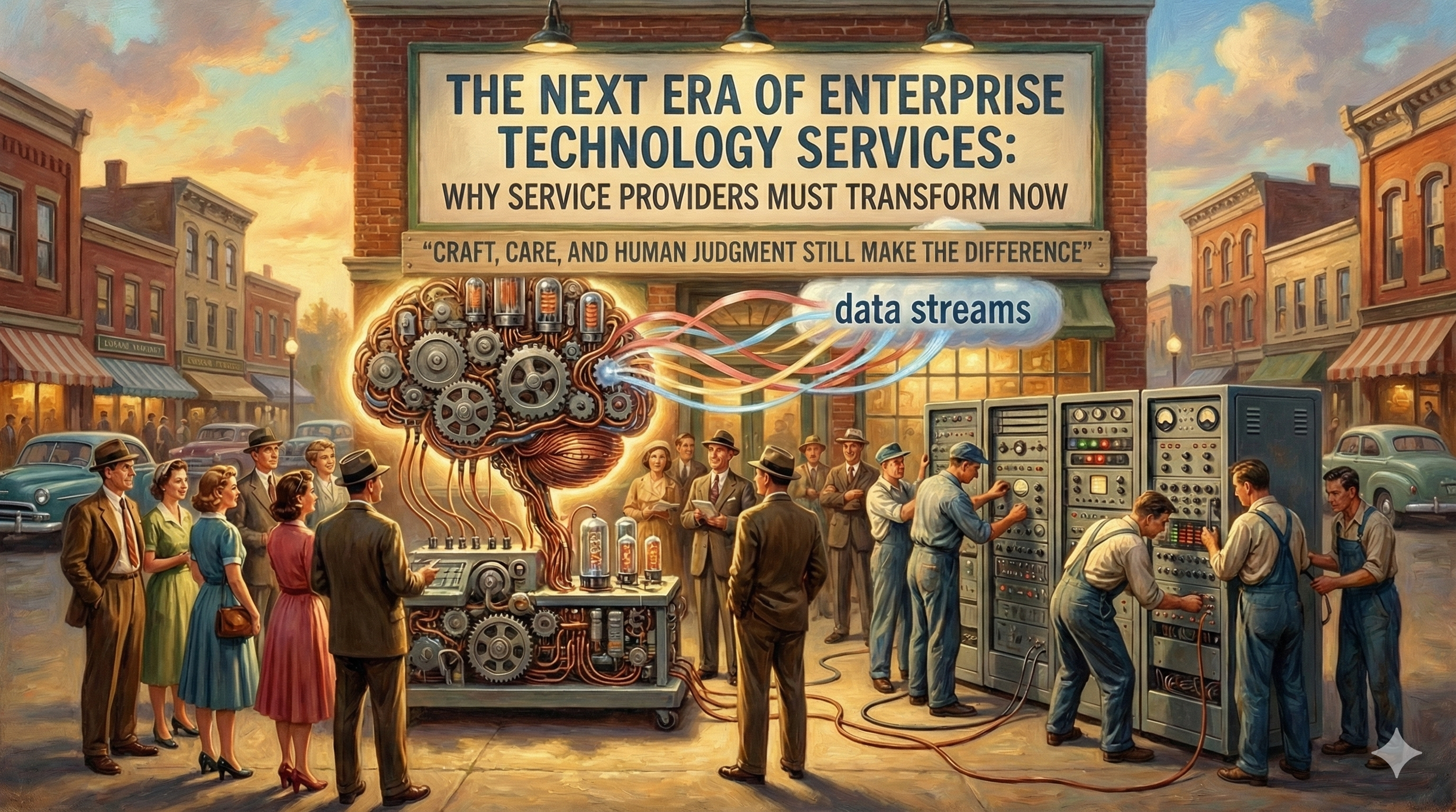
“The Next Era of Enterprise Technology Services: Why Service Providers Must Transform Now”
What I’m seeing more clearly now is that this moment isn’t about adopting the next wave of technology. It’s about deciding how we want to operate as partners at scale.
Cloud, AI, security, and automation have matured to the point where the differentiator is no longer access or capability — it’s judgment, discipline, and execution. 🎯
📘 I just published a new blog:
“The Next Era of Enterprise Technology Services: Why Service Providers Must Transform Now”
This blog is meant to prompt a pause. ⏸️
To ask whether we’re truly building platforms that compound value over time or simply moving faster through the same delivery models. Whether we’re helping clients reduce complexity or unintentionally adding to it. And whether we’re organized to scale outcomes, not just activity.
Because in the end, technology may accelerate everything, but it’s the people, the operating models they design, and the craft they bring to execution that determine whether progress turns into impact. 👥⚙️
The blog is meant to prompt a hard look at where service providers are headed:
🔹 Are we truly differentiated, or just busy?
🔹 Can our delivery models scale without eroding margin?
🔹 Are we investing in platforms and orchestration, or still selling hours?
🔹 Would clients describe us as craftsmen, or presenters?
🔹 Are we one of the providers the market is consolidating toward, or away from?
⏳ The next 12–24 months are a tipping point for the industry. Those who adapt their operating models, economics, and partner posture will lead the next era. Those who don’t will feel the impact quickly.
Would love to hear how others are thinking about this shift.
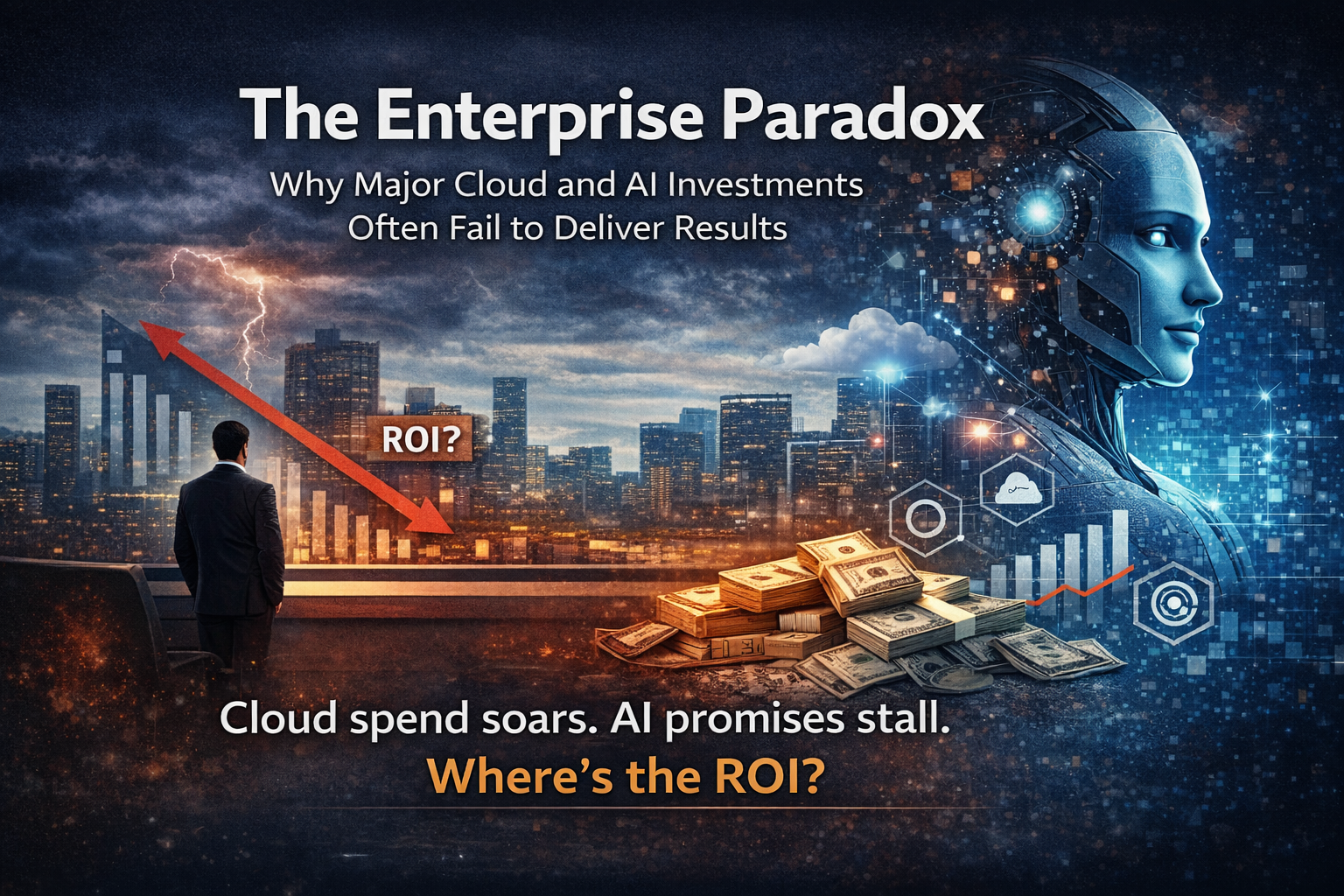
The Enterprise Paradox: Why Major Cloud and AI Investments Often Fail to Deliver Results
💬 “We’ve spent millions on cloud and AI. Where’s the ROI?”
👂 I hear this constantly from clients.
✅ The technology works. ✅ The teams are capable.
⚠️ But many organizations still struggle to clearly connect cloud and AI investments to tangible, measurable business outcomes.
Here’s the fundamental disconnect I keep seeing:
🤖 AI promises efficiencies at scale and the elimination of repetitive work, yet most organizations still approach AI as isolated use cases rather than enterprise software development. That’s the critical mistake. Scaling AI across workloads, business systems, and workflows requires treating it like any mission-critical software platform.
✍️ I wrote this blog to share what I’m seeing across clients today, and why cloud strategy, AI adoption, and financial governance need to be treated as core enterprise capabilities, not a collection of disconnected initiatives.